



03 Dec 2025
0
Used vs New: Should You Buy a 100 000 km Premium SUV or a Brand-New Chinese SUV?
If you’ve been SUV-shopping in South Africa lately, you’ve probably noticed a weird thing happening in your browser tabs:
-
On one tab: a brand-new Chinese SUV — Haval Jolion, Omoda C5, Jaecoo J7, Chery Tiggo, Jetour, BAIC, etc.
-
On the other tab: a used VW Tiguan, BMW X3 or Mercedes GLE/X5 with 100 000+ km on the clock…
-
And the prices? Often shockingly similar.
Example:
-
A new Haval Jolion starts around R348 950 in 2025.
-
An Omoda C5 starts around R329 900, with finance offers from roughly R4 599 p/m depending on term & deposit.
-
A Jaecoo J7 is listing from about R440k–R500k new, depending on spec.
And for similar money, you’ll find:
-
A 2017–2019 VW Tiguan / BMW X3 / Mercedes GLC/X5 with 100 000–140 000 km on Autotrader and similar platforms.
So… do you go new Chinese or used premium German?
Let’s unpack this properly.
1️⃣ The Price Tag vs What You Actually Get
On paper, the sticker prices might be similar. But the spec levels usually aren’t.
New Chinese SUV (Haval / Omoda / Jaecoo / Chery / Jetour etc.)
For ±R350k–R450k you often get:
-
Turbo-petrol engine, auto gearbox
-
Big touchscreen, wireless CarPlay/Android Auto
-
Panoramic roof (on some trims)
-
Full LED lights, 18″ alloys
-
Adaptive cruise / lane keep / 360° camera (on higher trims)
-
5-star safety ratings in many cases
The whole pitch is: lots of car for the money.

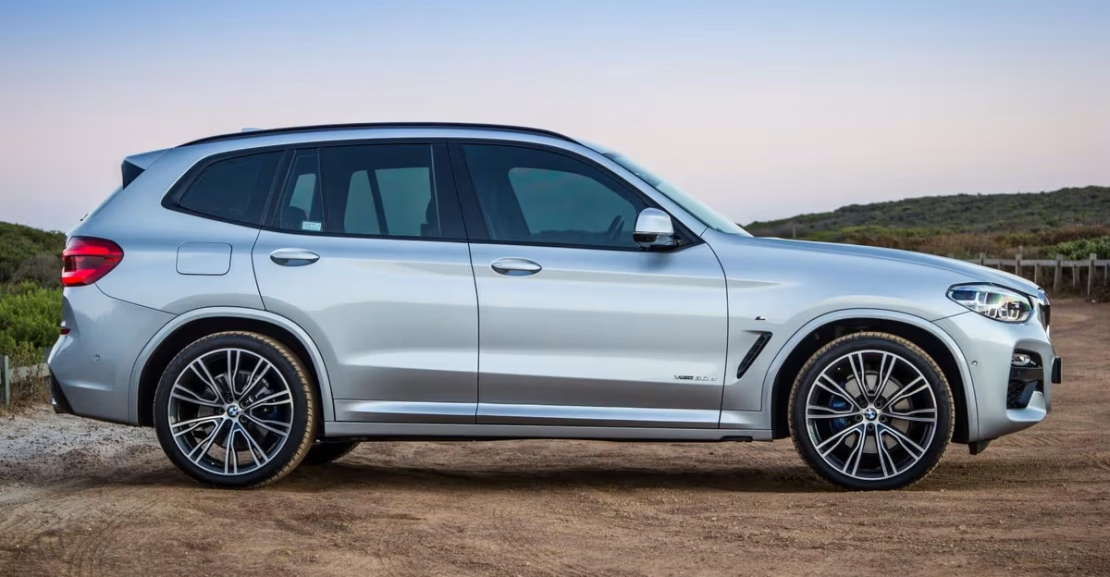
Used Premium SUV (Tiguan / X3 / GLC / X5 etc.)
For similar money, you’re typically looking at:
-
Car that was R700k–R1.2m new
-
5–8 years old
-
100 000+ km
-
MotorPlan or warranty either finished or close to expiring
-
High original build quality, nice interior, solid ride
-
Less tech (older infotainment, fewer driver aids)
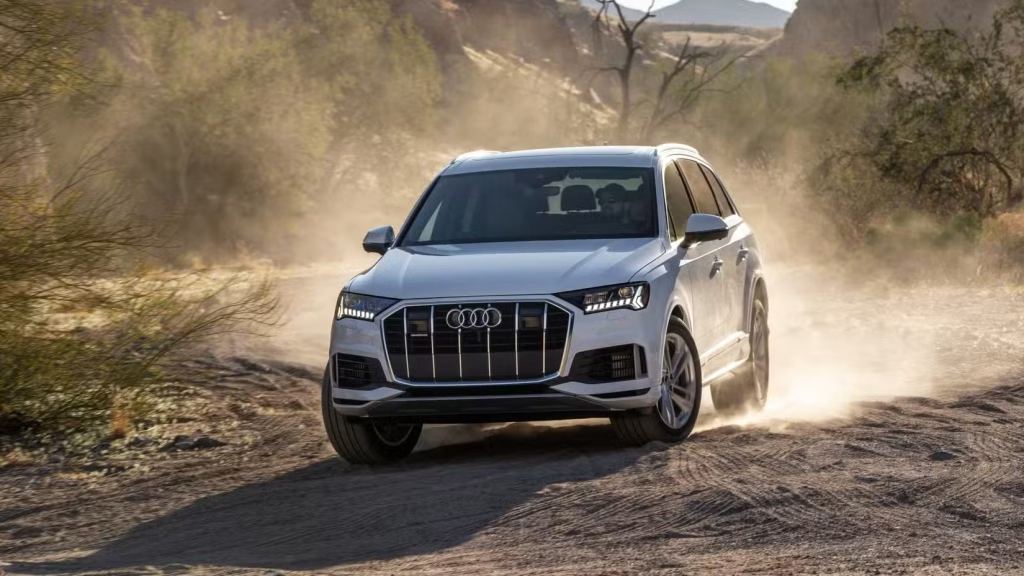
So the real price question is:
Do you value age & kilometres less than the badge?
Or do you value warranty, fresh mileage and new tech more than logo prestige?
2️⃣ Finance: Balloon vs Traditional – and How It Changes the Story
Most South African buyers are financing their SUVs. The structure of the deal can make one option much safer than the other.
A. New Chinese SUV – Typical Finance Pattern
-
Lower interest rate (banks often give better rates on new cars)
-
Longer term (72–84 months commonly offered)
-
Sometimes balloon / residual (e.g. 20–35%) to get monthly payments lower
-
Example published offers like:
-
Omoda C5 from ±R4 599 p/m on a structured deal with balloon
-
This means:
-
Monthly instalment feels affordable,
-
But you must have a plan for the balloon (trade in, refinance, or pay cash).
B. Used Premium SUV – Typical Finance Pattern
-
Slightly higher interest rate (used car risk for the bank)
-
Often shorter term (60–72 months)
-
Balloon possible, but banks are more cautious on high-mileage cars
-
Monthly payment can be similar or even higher than the new Chinese SUV, with no warranty cushioning you.
The Smart Questions to Ask:
-
If both cars cost me around R6k–R8k p/m, where is my risk lower?
-
If I hit a major repair (gearbox, turbo, suspension) – which one ruins my budget?
-
Am I comfortable with a balloon payment at the end? What’s my exit plan?
3️⃣ Warranties & Service Plans: Where Chinese Brands Hit Hard
This is where new Chinese SUVs really flex.
A 2025 warranty comparison in SA shows:
-
Chery/Omoda/Jaecoo:
-
5-year / 150 000 km vehicle warranty
-
10-year / 1 000 000 km engine warranty (first owner)
-
-
Haval:
-
7-year / 200 000 km warranty in many cases
-
-
BAIC / GAC / BYD: strong 5–7-year warranties, with long battery warranties on EVs.
Compare that to:
-
A 6-year-old Tiguan / X3 / GLC / X5 with 110 000 km:
-
Out of MotorPlan
-
Out of standard warranty
-
Maybe an aftermarket warranty added – but with limits, exclusions and claim caps.
-
So:
New Chinese SUV = Warranty + service plan + predictable costs
Used premium SUV = No real safety net if something big breaks
One big failure (gearbox, injectors, air suspension, electronics) can wipe out years of “savings” on that used premium bargain.
4️⃣ Maintenance, Parts and Long-Term Ownership
New Chinese SUV – The Reality in 2025
-
Parts availability has improved a lot in SA, especially for Haval, Chery/Omoda/Jaecoo, and GWM.
-
Service intervals are similar to other brands (typically every 10 000–15 000 km).
-
Labour rates at dealers often lower than German luxury dealers.
-
Unexpected jobs are often handled under warranty during the first 5–7 years.
The downside:
-
Long-term reliability beyond 7–10 years is still building a track record.
-
Resale values are better than a few years ago, but still not as predictable as German premium marques.
Used German Premium SUV – The Reality
-
Excellent build quality, strong engines & gearboxes if maintained properly.
-
But service and repair bills out of plan can be brutal (R15k–R30k+ for a big service is not crazy; suspension or gearbox jobs can be much more).
-
Genuine parts are expensive, and OEM run-flat tyres, air suspension, and premium brakes add up.
In other words:
The used German SUV is like a high-performance athlete:
sensational when everything works — but expensive when it doesn’t.
5️⃣ Resale Value: Badge vs New-Brand Momentum
Historically:
-
BMW / Mercedes / VW SUVs hold value better because of badge power and established demand.
-
Chinese brands depreciated faster due to brand perception, limited dealer network, and “unknown future” worries.
But 2024–2025 changed the game:
-
Chinese brands are now offering serious spec + big warranties, and they’re selling well in SA.
-
As more Jolions, Omodas, Jaecoos, Jetours, Cherys and BYDs hit the roads, resale demand is improving.
Still:
-
A 10-year-old BMW X5 with a strong service history can still find a happy buyer.
-
A 10-year-old first-gen Chinese SUV? The long-term market is still maturing.
So you’re essentially betting on:
-
Brand stability & history (German)
vs -
Future growth & improving reputation (Chinese)
6️⃣ Tech, Safety and Everyday Experience
This is where newness matters more than badge.
New Chinese SUV:
-
Massive screens, digital clusters
-
Wireless CarPlay/Android Auto
-
360° camera, blind-spot monitor, lane assist, adaptive cruise (on higher trims)
-
More modern safety design (current crash standards)
Used German SUV (7–8 years old):
-
Still solid and safe, but:
-
Older infotainment, sometimes small screens
-
Driver aids may be limited or optional extras that your used unit doesn’t have
-
No full 360° cameras or fancy HUD in many trims of older generations
For daily driving in 2025:
A new mid-range Chinese SUV can feel more modern to live with than an older German SUV, even if the German still rides better and feels more “premium” in materials.
7️⃣ EVs, Hybrids and “Next-Gen” SUVs
Chinese brands (Omoda, Jaecoo, BYD, GWM, etc.) are aggressively launching:
-
Hybrid & plug-in hybrid SUVs
-
Full EV SUVs with good range and long battery warranties
If you buy new Chinese SUV now, you can:
-
Access PHEV or hybrid tech (e.g. Jaecoo J7 SHS with ~1 200 km combined range).
-
Lock in long battery + vehicle warranties.
Your used premium SUV will likely be:
-
Pure petrol or diesel
-
Less efficient
-
More vulnerable to future fuel price spikes or emissions-related policy changes.
8️⃣ So… Which Should You Buy?
Let’s make it real and relatable.
Choose the New Chinese SUV if:
-
You value predictability: fixed payments, strong warranty, capped/known service costs.
-
You want modern tech & safety in your daily life.
-
You plan to keep the car for 5–7 years and then trade it in.
-
You don’t want surprise repair bills north of R20–R30k.
-
Badge prestige is less important than peace of mind and features.
This is ideal for:
-
Young professionals
-
Families with tight monthly budgets
-
Uber Black / ride-hailing / business users who value uptime and low TCO.
Choose the Used Premium SUV if:
-
You love driving and want that premium feel: ride quality, refinement, interior quality.
-
You understand (and can afford) the risk of big repair bills.
-
You’re happy to invest in extended warranties, specialist mechanics and OEM parts.
-
You’re okay with an older infotainment system and less flashy tech.
-
You’re buying with cash or a short finance term, and you treat it as a bit of a passion purchase.
This is ideal for:
-
Enthusiasts
-
High-income buyers who can absorb large unexpected costs
-
People who value brand prestige and long-distance comfort above all else.
9️⃣ SUVs Verdict: Head vs Heart
-
HEAD decision (rational) → New Chinese SUV wins most of the time on warranty, tech, running costs and risk.
-
HEART decision (emotional) → A well-kept X5, GLE or Tiguan still pulls hard if you grew up dreaming of German badges.
At sportutilityvehicles.co.za, we see a clear trend:
For the average South African buyer in 2025,
a new, well-specced Chinese SUV is often the smarter, safer long-term buy
than a high-mileage, out-of-plan premium SUV at the same price.
But if you go used premium, do it with open eyes, a good mechanic, and a healthy emergency fund.

